Saturday, May 30, 2020

New life style for days with covid-19 remains to be seen in Japan


May 30, 2020


New life style for days with covid-19 remains to be seen in Japan

Japanese people are moving step by step toward resuming their normal life after two months of self-restraints to survive the covid-19 pandemic, but they are asked to explore a different normal lifestyle for the new days in which they live with the new virus.
Restrictions on the use of public facilities and places, such as libraries, museums and parks, are gradually being removed. This has given a sigh of relief for many families, making them possible to go out with kids and let them play out on the ground. However, people working on small businesses in various fields are having difficulty attracting customers back to their shops.
Hardest hit by the "jishuku" self-restraint moves in Japan's society is the night entertainment business world with operations in busy areas in major cities in various regions.
It is far from certain if and when the night businesses will truly return to their previous situation.
Japan's policymakers have come to remove or soften restrictions on people's life and business activities in view of signs that the first wave of spread of the deadly virus has peaked out in Japan, but people are urged to continue the series of new living customs, such as wearing face masks, keeping a social distance in making lines at public places, and avoiding crowded, bustling areas.
The "Bunkagai" district in the heart of Kurume, in the southern part of Fukuoka Prefecture, southwestern Japan, is a hub of night business operators, which have attracted thousands of people almost every night. But passers-by on the streets and alleys in the area are scarce.
It remains unknown if the area will actually take its energies back, and the plight of night businesses in the district may undermine the local economy.

Tuesday, April 28, 2020

Migrating swallows tell Japanese people rotation of seasons amid pandemic


April 28, 2020

Migrating swallows tell Japanese people rotation of seasons amid pandemic

Swallows migrating from the south to the Japanese Archipelago are busy making nests from April to May before parenting toward summer.
First groups of swallows, "tsubame" in the Japanese language, flying from Southeast Asia reach the southernmost areas of Japan from late February to early March.
Researches show tsubame can fly a maximum 300 kilometers a day in migrating to the Japanese Archipelago, but they usually fly 20 to 30 kilometers a day from island to island toward Japan.
The season's first appearance of tsubame coming in is an important harbinger of spring in southern to southwestern Japan.
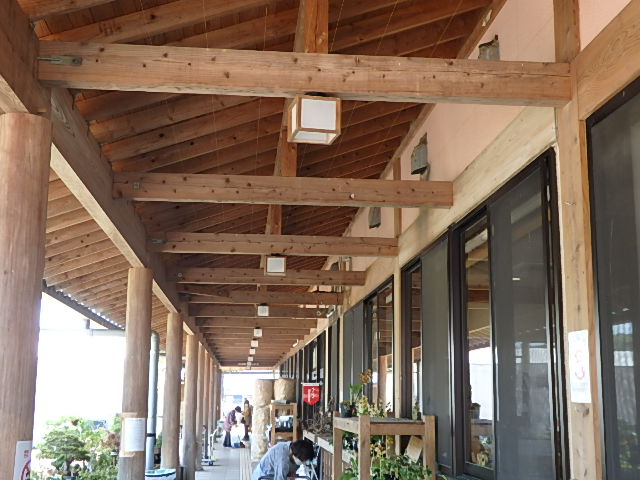
At a farmers' market in the southern part of Fukuoka Prefecture, Kyushu, southwestern Japan, many tsubame were seen flying busily between their nests and nearby feeding areas on a clear day late April.

"We are in a pretty fix (for the new corona virus), but they have come to us this year, too, and this is just joyous to us, you see," a shopper said.
With a shiny black body and tail wings as well as a red throat, tsubame birds usually return to the same areas as they stayed in the previous year.
About 20 percent of them return to the same nests as they used the previous year, according to researches, and when their old nests are destroyed or unfound, they make new nests nearby.
Herds of tsubame using the building of the farmers' market as their summer habitat make nests on the wall or around the vents beneath the extended wooden roof. To build new nests, they bring small pieces of mud and straws one by one from fields around the areas.
Reports of infections and deaths of covid-19 kept increasing through April despite a series of measures taken by Japan's government to contain the pandemic. As of April 28, the number of infected people within Japan came to 13,895, while fatal cases totaled 413.
Japan declared a state of emergency across the country on April 7, requesting local government governors to urge residents of their respective regions to try to protest themselves individually from the deadly virus.
They are recommended to wear masks, wash their hands carefully every time on returning home, refrain from going out for nonessential purposes, and take a social distance of about 2 meters in making lines at shopping centers and other public places.
It has become a new custom for people to rub their hands with disinfectants placed at the entrance of shops and public facilities.
As the emergency measures are likely to be extended into May, Japanese people are asked to get accustomed with the series of rules as a "new normal lifestyle" from now on.
"We, the human beings, should explore a way to live with the virus, rather than trying to eliminate it," a famous infectious disease researcher said in a newspaper article.
The ongoing fight against the new virus is expected to be a long battle.
Experts say that Japan must continue efforts not just to contain the disease but also to get the people acquire a social immunity in an attempt to pull out of the pandemic.
The studies of past global epidemics show that the civilizations which lived with many infectious diseases have proved to be tougher than other civilizations.
The latest pandemic reminds us that the human beings are a part of the nature and cannot live with no linkage with other creatures. The swallows flying vigorously and orderly within their summer habitats in Japan appear to be showing this providence of nature. 

Monday, March 30, 2020

Japanese having calm spring time to overcome covid-19 epidemic


March 30, 2020

Japanese having calm spring time to overcome covid-19 epidemic

"Nothing can go on all the time as usual in people's life." This must be a feeling many Japanese equally have these days, as Japan finds itself in a hard fight to halt the spread of the covid-19 epidemic, as is the case with other countries.
Heartened with the arrival of spring, Japanese people enjoy themselves around this time of the year while having "sakura" cherry blossom-viewing parties at nice spots. But the new deadly virus has forced them to give up the sakura viewing and other outdoor spring functions.
Unlike the United States and European countries, Japan has no legal base to urge its people to stay at home in order to overcome the pandemic. Japanese people are instead asked to refrain from going out for nonessential purposes.
This is expected to amount to the shelter in place instructions, just as seen in some foreign countries, in view of the serious character of Japanese people.
Traffic and people's movement are limited, not just on streets in big cities but also at tourist spots and other places which attract people hoping to see sakura blossoms and pretty spring flowers. As a result, attractive sakura trees at many places stand little noticed by viewers.
Japan's first covid-19 infection was confirmed in mid-January, and then, the number of infected people in the country kept increasing uninterruptedly.
The pace of increase was less quicker than in other countries from February to early March, but the speed has become faster week by week since then.
As of March 29, the number of infections with the new virus across Japan had come to 2,612, including about 50 fatal cases.
Japanese people experienced hard days after the devastating earthquake-triggered tsunami tidal waves claimed some 20,000 lives mainly in the northeastern part of Japan in March 2011.
In the following years, the strength of their solidarity was tested as they tried hard to get back on their feet from the mishap. Their unity is expected to be tested this time, again, though their current enemy is invisible and hard to catch.

Friday, February 28, 2020

Schoolchildren, parents joining Japan's fight to contain coronavirus epidemic


February 28, 2020


Schoolchildren, parents joining Japan's fight to contain coronavirus epidemic

Japanese people find themselves buoyant with the advent of spring around this time of the year. March is one of the brightest times for most people living in Japan, but the situation for them has proved to be quite different this year.
Japanese government officials have been busy taking steps to contain the new coronavirus epidemic, which broke into Japan early February after causing thousands of people in China to contract the fatal disease from December to January.
Japan's shoreline operations against the epidemic failed as a luxury cruse chip with over 3,700 passengers and crewmen entered Yokohama Port February 7 without a sufficient quarantine, after carrying an infected passenger from Japan to Hong Kong.
Japan's fight against the covid19, the virus so named by the WHO, culminated in Prime Minister Shinzo Abe's call for closing elementary schools and junior and senior high schools across Japan from early to late March, in an effort to keep the epidemic from spreading among pupils and students.
The action triggered moves among school officials and parents across the country to prepare an environment for children and students to study and spend their time out of school. 
Most influenced by the action are parents both of whom have jobs. The situation is said to be even more serious for single mothers. Groups of such mothers in some areas wasted no time to talk to each other about ways to take care of their children by turn.
At an elementary school in the southern part of Fukuoka Prefecture, southwestern Japan, schoolchildren rushed out to the school grounds for a play time after lunch. They appeared to have no information as yet about exactly when the school is to be closed.
One boy said, "Don't know well, but the head teacher's just gone to meet somebody. So said an upper class kid."
Schoolkids seemed generally careless spending their time, despite their parents' concerns about what to do with their daily life ahead.
Nursery schools and after-school nursing facilities are exempt from the action for closing schools. This is expected to lead working mothers and others in a similar situation to flock to places which can take care of children while the schools are closed.


Thursday, January 30, 2020

Japan's warm winter days add to fears of spread of irregular climate


January 30, 2020

Japan's warm winter days add to fears of spread of irregular climate

Japanese people in many parts of the country saw a string of warm, rather sunny days early this year. The warmness made many kinds of flowers bloom from early to mid-January, about 30 to 40 days faster than in the ordinary year.
On the bank of a brook flowing in the old castle town area of Akizuki in the northern part of Kyushu, southwestern Japan, were a few tiny white dandelions, which were seen standing straight up amid a warm rainfall. Daffodils and rape blossoms were also found around the brook.
Similar unusual phenomena have been witnessed elsewhere in southwestern to western Japan this winter.
Snowfalls were little seen or limited in many parts of the Japanese Archipelago in the early days of January. This came as a relieving, happy sign to those who have to grapple with heavy snow every winter. But some people complain of the abnormally warm weather this winter.
Limited snowfalls mean that soil in the fields is exposed to cold winds with no cover to keep it warm for a good crop in spring.
"Planted in my gardens are mostly cold-resistant perennial flowers, so, unless cold weather comes to stimulate their growth in winter, a smooth blossoming cannot be expected in the coming months," a flower lover says.
The unusually warm weather also has annoyed those who grow root vegetables like horse radish.
These vegetables grow too fast beyond specified sizes this winter, making it difficult to supply their produce to the market.
Some weathermen also warn that the warm weather in Japan this winter might have something to do with the recent extensive forest fires in Australia, which are linked to the global warming.

Saturday, December 28, 2019

X'mas season event in busy southwestern Japan city focuses on eco-friendliness


December 28, 2019

X'mas season event in busy southwestern Japan city focuses on eco-friendliness

Brilliant illumination displays have come to stay as an important part of Christmas and other open-air winter events across Japan.
The Fukuoka Christmas Market is one of these events, but it has been designed not just to entertain visitors amid cold weather but also to give them an opportunity to think about the importance of eco-friendliness.
The event was held simultaneously at four different locations in Fukuoka, one of the busiest cities in southwestern Japan, until December 25.
The  biggest site of them was set up at the square in front of the north entrance to JR (Japan Railways) Hakata Station.
The European-taste Christmas Market at the Hakata Place Light Town, the seventh of its kind, attracted hundreds of people every night.
A panel placed at a corner at the site carried an organizers' message calling for cooperating in reducing food loss and garbage while enjoying the happy event.
As part of efforts to raise awareness about eco-friendliness, organizers recommended visitors to use mug cups, rather than conventional disposable plastic and paper cups, at shops which serve hot wine and hot whisky.
The original, colorful mugs have been made with different designs every year since the first Christmas Market there in 2013.
In an additional effort to reduce the use of plastic products, wood-made knives and forks and a ceramic plate were used at a shop serving sausages.
As the number of supporting local businesses has continued to grow, this year's Christmas Market at the station square brought together about 30 shops providing foods and drinks and carrying accessories and Christmas goods.
"Some shops change sometimes and open on certain days, so you can enjoy many times," a staffer said.
The station square spreads on an area of about 200 square meters, including a rent site of 62 square meters.
The square is located at so convenient a place that draws not just interested people but also commuters or passers-by for attractive events.
As the night falls, seats in front of the stage and the light tower were occupied by spectators one by one.
At a different place at the square was a crowd of people, including families and kids, looking up at their own beaming faces displayed on a huge screen on the wall of the station building.
The use of less power-hungry LEDs is seen to spread further in Japan and this is expected to reduce the cost of night illuminations.
Many Japanese people, families and couples alike, are expected to be drawn more to heart-warming light displays in the holiday season ahead.


Thursday, November 28, 2019

More attention called to "washoku" Japanese dishes as UNESCO World Cultural Heritage


November 28, 2019

More attention called to "washoku" Japanese dishes as UNESCO World Cultural Heritage

Japan's autumn this year should be shorter than usual. So had many weathermen predicted, and their prediction has almost hit, as early signs of winter appeared from the middle of November. Japan's autumn can be characterized many ways, say, "autumn of art" and "autumn of appetite” with lots of delicious foods available. The 24th day of November is designated as "the Day of Washoku" (Japanese dishes) by a domestic private-sector, nonprofit organization.
Washoku, or nihonshoku, was designated as the UNESCO World Cultural Heritage in December 2013 after years of campaign by groups and organizations in various sectors.
Japanese people's food custom has been largely westernized since the Meiji era late in the 19th century. The introduction of western foods led Japanese to favor meat-based rich-calorie dishes rather than their traditional seafood or vegetable-oriented, less oily meals. But these days, they have come to realize the reasonable, health-oriented nature of Japan's original meals once again.
Experts summarize the characters of washoku foods and dishes the following ways, washoku dishes are prepared with fresh wide-ranging ingredients in their respective season; they support healthy food life; they are made so to demonstrate the beauty of Japan's nature and seasonal changes; they have close links to Japanese people's life on seasonal events and functions related to special days like the New Year's holidays.
The Day of Washoku was designated so in 2015 by the Washoku Association of Japan, aimed at disseminating the knowledge about Japan's food culture and its traditional dishes and cuisines.
The 24th day of November, 11-24, was selected as the special day on a play on words, or the similarity of Japanese pronunciations of the terms involved and the day 11-24.
The traditional washoku meals basically consist of the main dish, usually cooked rice served in a cup, and two side dishes. One of the side dishes comes usually with a "dashi" soup prepared with ingredients like dried mushrooms and dried seaweeds. The combination enables the one to take various kinds of foods and nutrition little by little, neither too much nor too little, with the original taste of  each ingredient kept intact.
Japanese eat pumpkin on the winter solstice with hopes to bring in happiness on the cycling solar life, while the "osechi" meals with foodstuffs of good omen are served on the New Year's Day to celebrate the beginning of the year.
Japanese have had many other food-related customs to observe throughout the year, which help remind them how best to live in their season-rich country. The series of washoku-related events is expected to keep supporting their food life and health from generation to generation ahead.